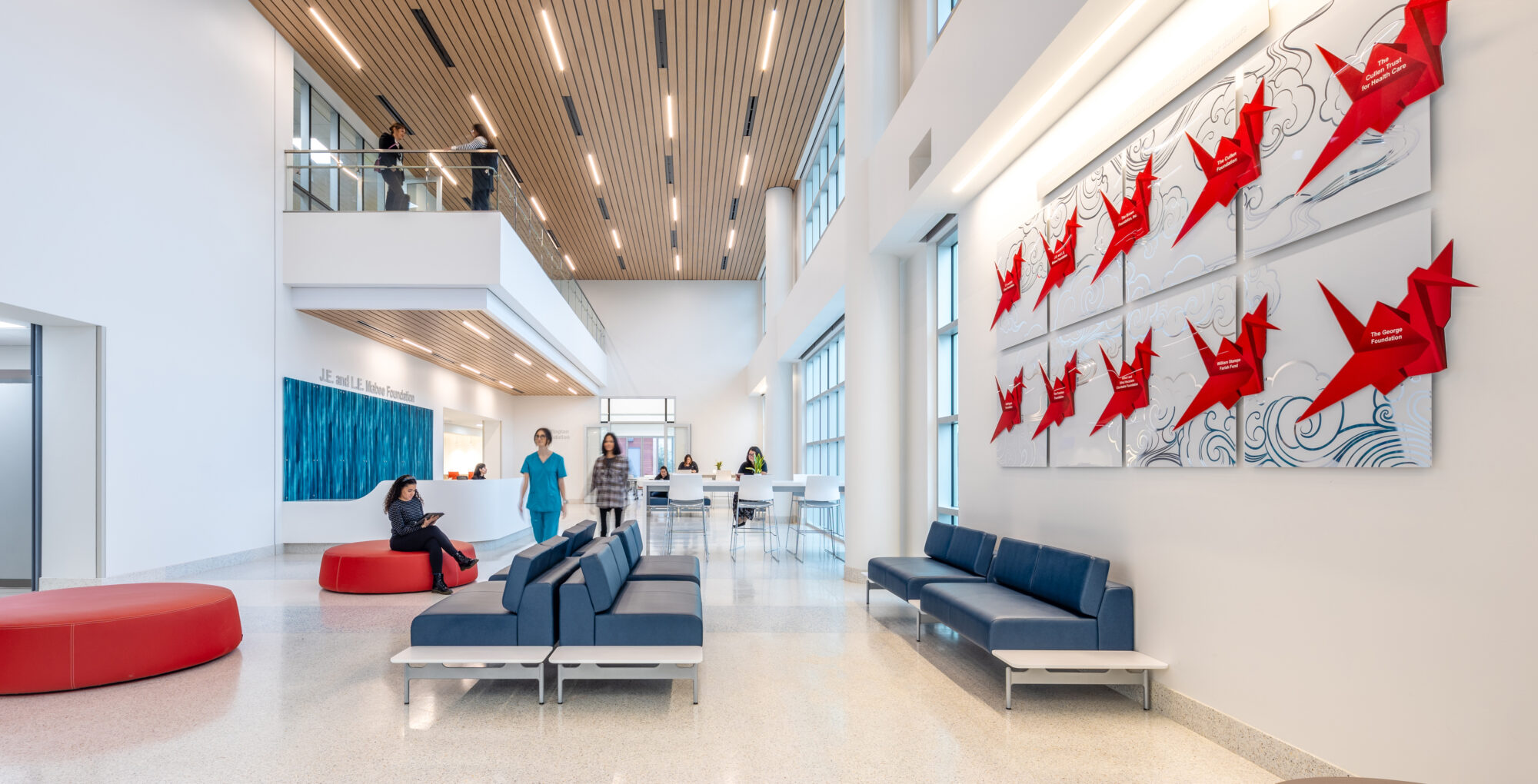
Creating an optimal healthcare environment extends beyond medical equipment and clinical efficiency. How patients and staff experience spaces plays a critical role in recovery, comfort, and productivity. Acoustic and lighting design are key elements in shaping that experience.
The Role of Acoustics in Healing Spaces
Noise pollution is one of the most common yet overlooked stressors in healthcare environments. Sounds from HVAC systems, medical equipment, conversations, and foot traffic can interrupt rest and elevate stress levels, potentially delaying recovery. Reducing noise levels can significantly enhance patient comfort, leading to a more restful environment conducive to healing.
Designers can address these challenges through strategies such as using sound-absorbing ceiling and wall materials, isolating ductwork to minimize mechanical noise, and designing mechanical layouts that separate noisy areas from patient care spaces. Effective acoustic design also ensures confidentiality during consultations and treatments, protecting patient privacy and fostering trust.
Good acoustics facilitate clear communication among healthcare staff, which is essential for teamwork and patient safety. Staff are better able to focus on their tasks in quieter environments, which can lead to increased productivity and job satisfaction. Proper acoustic design reduces reverberation and unwanted sound transmission, creating quieter, more peaceful environments that support patient healing and staff focus. Just as sound control improves learning, concentration, and productivity in other types of buildings, in healthcare it promotes rest, comfort, and well-being.
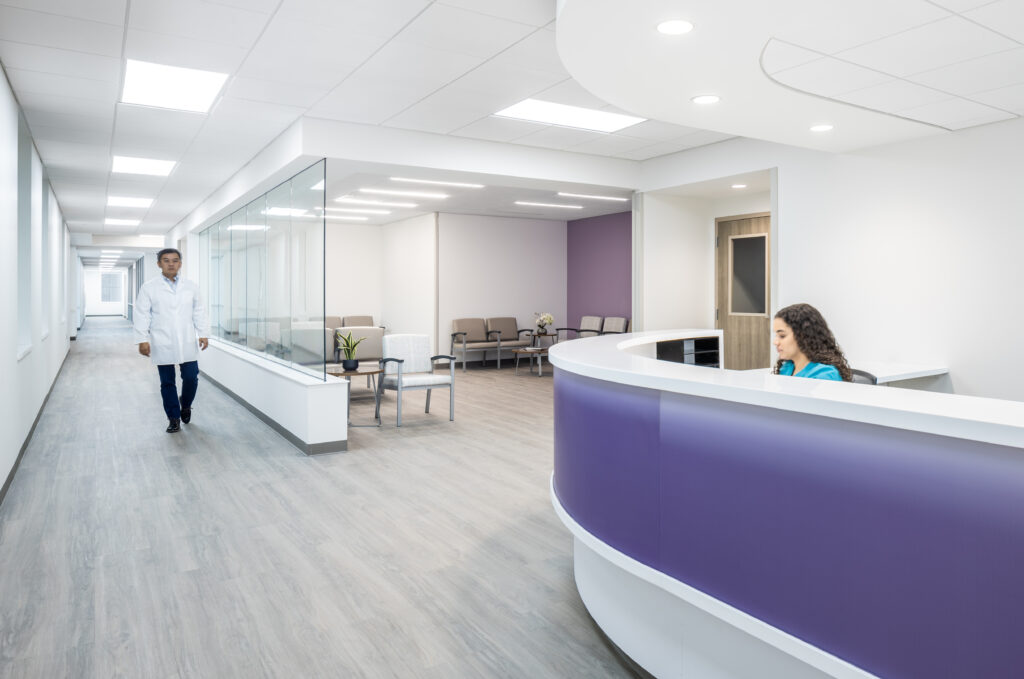
Lighting Design for Recovery and Performance
Lighting has a direct impact on physical and mental health. Circadian lighting systems, which simulate natural daylight patterns, help regulate sleep cycles, stabilize mood, and support the body’s natural healing processes. In patient rooms, this can lead to faster recovery improved comfort, and less stress.
Lighting design in healthcare spaces must also minimize direct glare and minimize glare across different space types to maintain visual acuity and comfort for both staff and patients. Task-specific lighting allows healthcare staff to have the right illumination for precision and safety in treatment areas and operating rooms, and for tasks in administrative spaces.
Proper selection of lighting control devices can improve sanitary conditions and infection control by incorporating easily cleaned and anti-microbial surfaces on some of the most frequently touched devices in healthcare spaces.
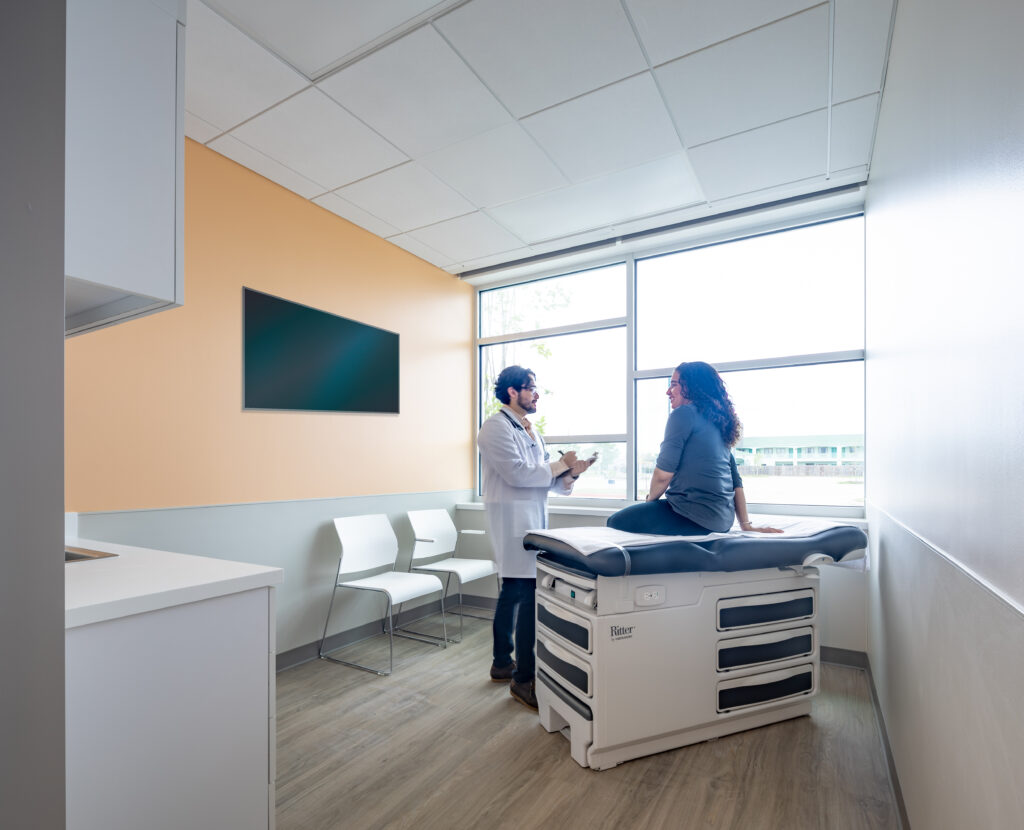
A Holistic Approach to Healthcare Design
When acoustics and lighting are thoughtfully integrated into MEP design, the result is a healing environment that feels both safe and restorative. Patients benefit from reduced stress and improved rest, which are vital for recovery, while staff experience better focus and overall comfort. Beyond functionality, these design elements enhance the aesthetic and emotional quality of the facility, creating a calm and welcoming atmosphere.
Prioritizing acoustic and lighting solutions demonstrates a holistic approach to care. By intentionally designing with sound and light in mind, healthcare facilities support patient recovery, staff well-being, and overall satisfaction, showing how the built environment contributes to better health outcomes.